

Sandra Avila
2 weeks ago
Great treatment, great staff that organizes your trip, excellent!
 Portugal
Where are you going?
Guests
1 Room — 2 adults
Preferences
—
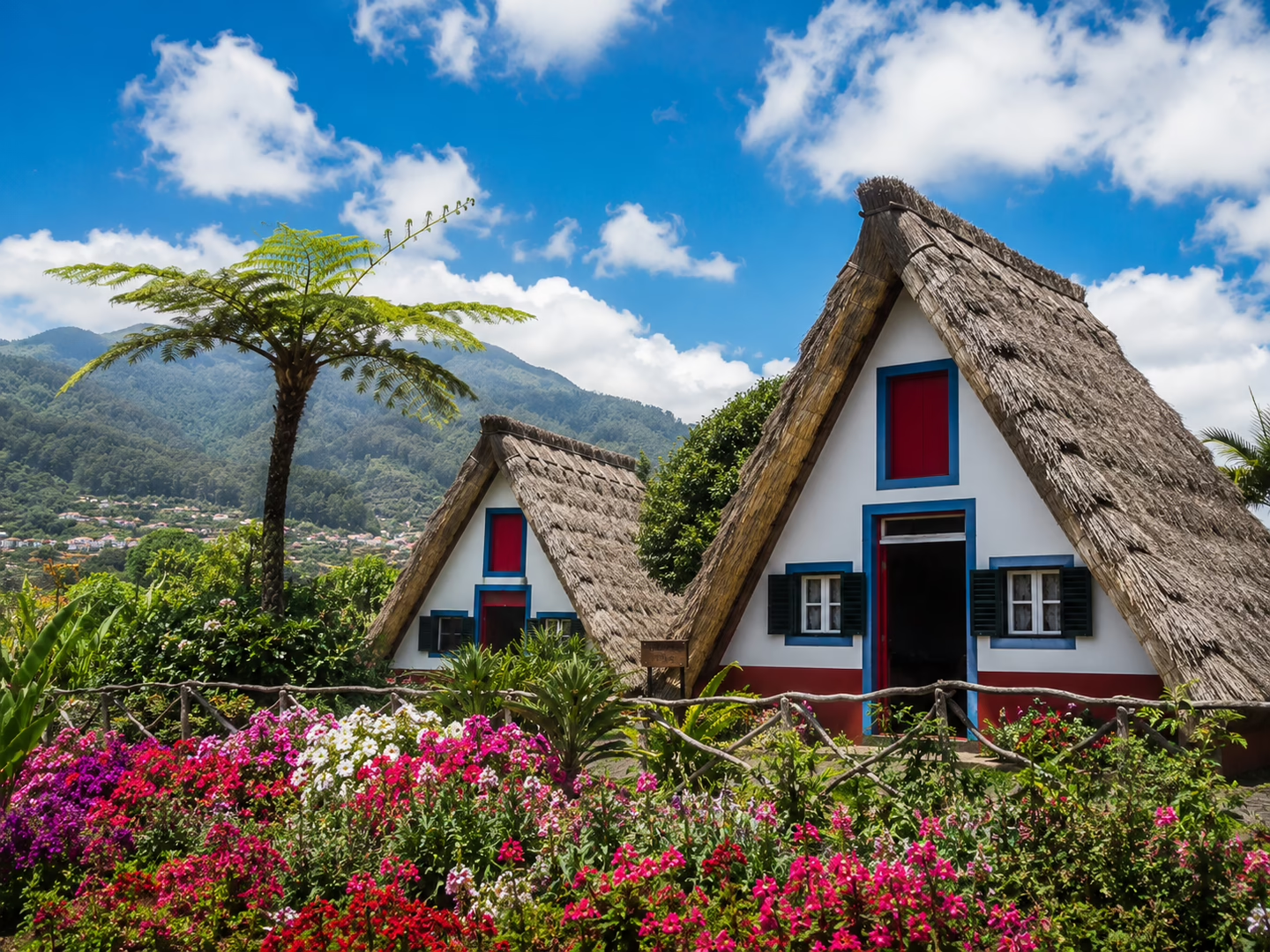
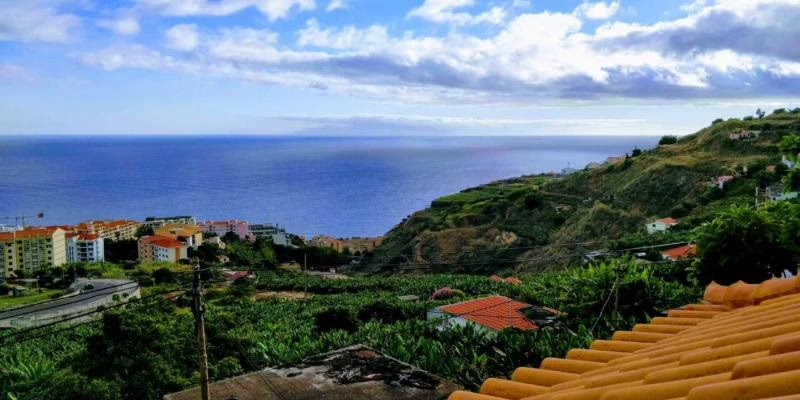
A volcanic island of eternal spring, where the sea crashes against dizzying cliffs and footpaths follow centuries-old water channels through laurel forest. From the cobbled lanes of Funchal to peaks that rise above a sea of clouds, Madeira is best explored slowly, with a poncha in hand and a mountain in view. This guide helps you decide what to see, when to go and where to stay.
The destination's essentials, hand-picked to spark your trip.
The capital packs in the Mercado dos Lavradores, the cathedral and Rua de Santa Maria, where dozens of doors painted by artists turn the old quarter into an open-air gallery.
A network of centuries-old irrigation channels threads through the laurel forest, a UNESCO World Heritage site. Trails like 25 Fontes or Caldeirão Verde reward you with waterfalls and deep green.
The trail linking the island's two highest peaks runs along sharp ridges, through tunnels and past viewpoints over a sea of clouds. It is one of Portugal's most spectacular walks.
One of Europe's highest sea cliffs, with a glass-floored skywalk suspended above the ocean and the terraced smallholdings still farmed at its foot.
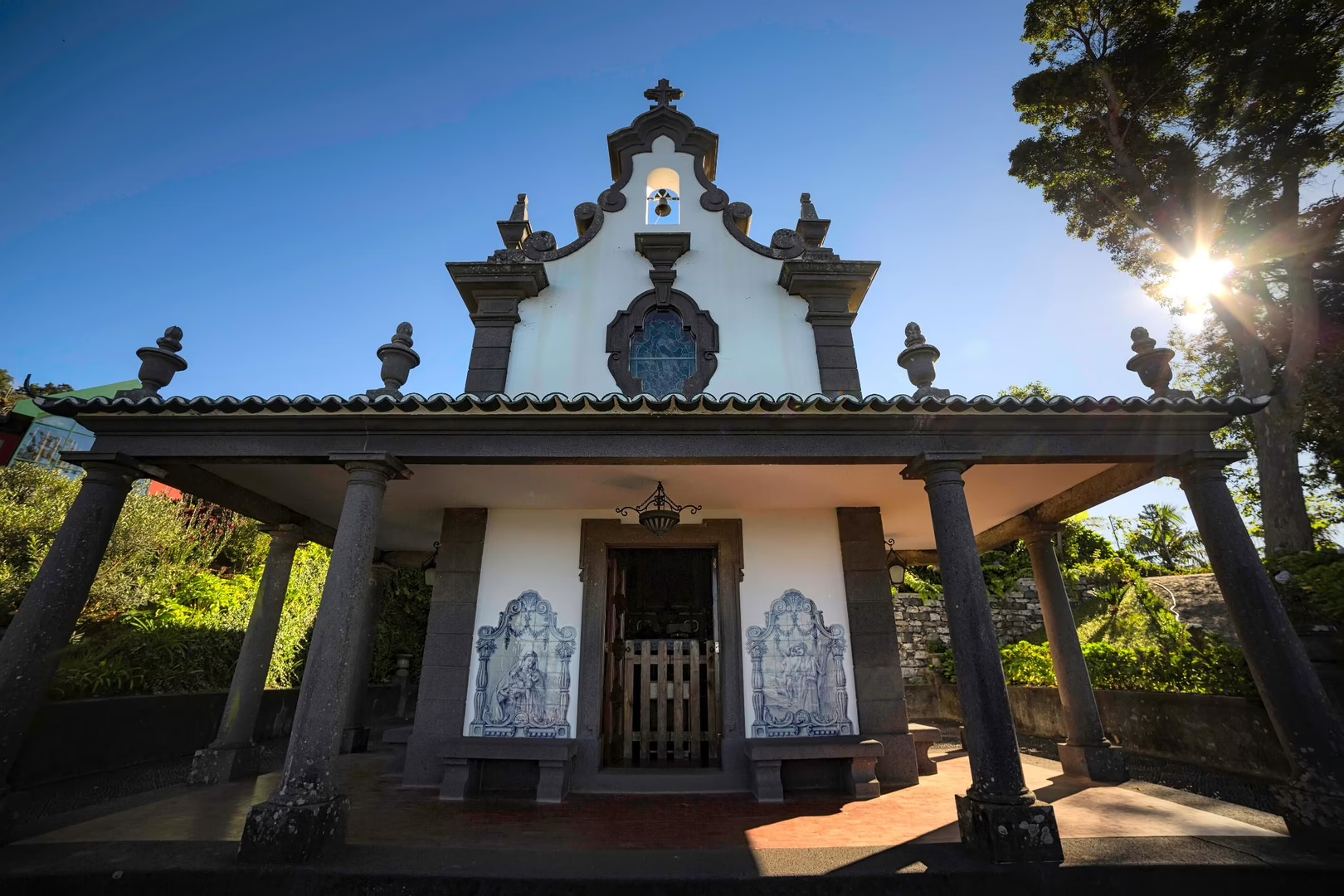
A cable car climbs from Funchal to Monte, with its tropical gardens and church. The traditional ride back down in wicker toboggans, steered by carreiros, is pure Madeiran heritage.
In the far northwest, solidified lava forms natural saltwater pools where you can swim sheltered from the Atlantic swell.
Beef espetada skewered on bay-laurel sticks, bolo do caco flatbread with garlic butter, black scabbard fish with banana and poncha sum up an honest, tasty island kitchen.
Madeira lives up to its eternal-spring reputation: mild temperatures all year and sharp microclimates, with a drier, sunnier south and a greener, wetter north. Almost any month works; the difference lies in the crowds and in what you want to do.
Mild and in bloom, with the Festa da Flor colouring Funchal. The best mix for walking the levadas before the heat, with the landscape at its greenest.
The warmest, driest and liveliest season, with the sea at its best for swimming and plenty of festivals. It is also the busiest, especially in Funchal and the natural pools.
The sea stays warm and the crowds thin out. It coincides with the Madeira wine harvest and brings pleasant days for hiking and whale watching.
Mild and perfect for escaping the cold. New Year fills Funchal for its famous fireworks over the bay, so book well in advance.
The neighbourhoods and areas with the most charm to stay in.
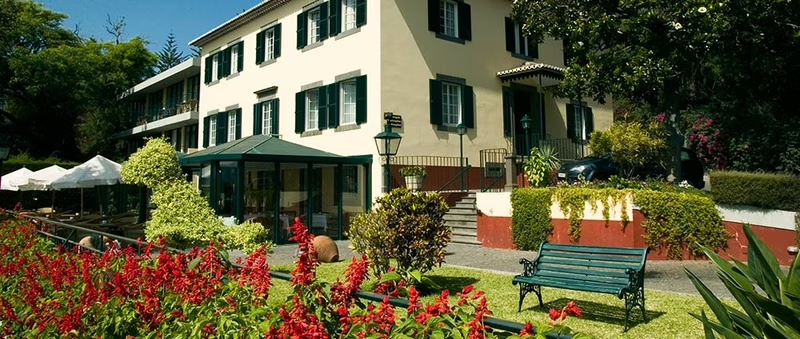
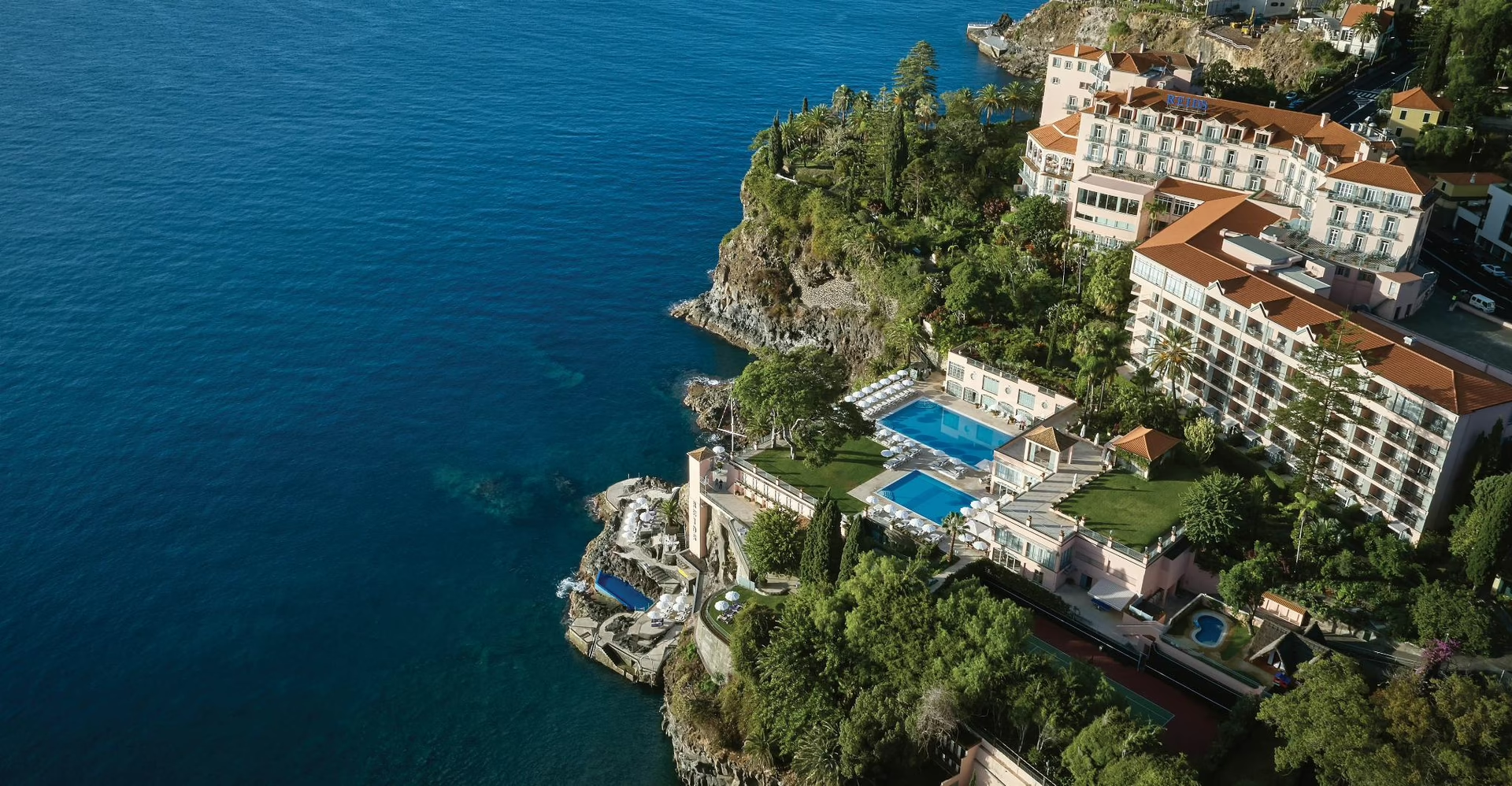
The capital and the island's natural base: the widest choice of hotels, restaurants and nightlife, the old town and a seafront hotel zone with ocean access. Ideal for first-timers who want everything close at hand.
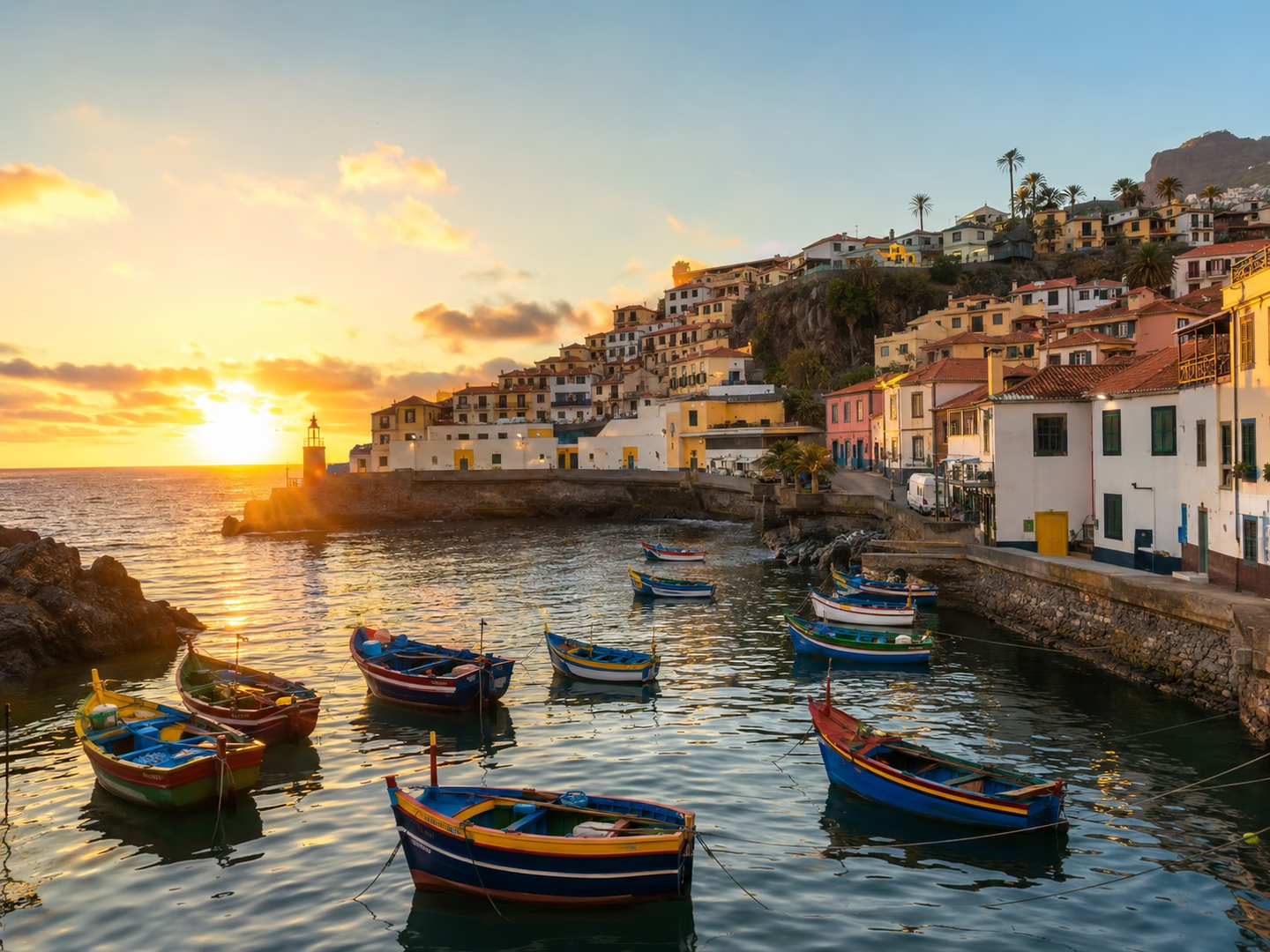
A genuine fishing village just minutes from Funchal, with painted boats, poncha on every corner and Cabo Girão nearby. Perfect for a quieter feel without straying far from the capital.
In the sunny southwest, it has one of the island's few golden-sand beaches, a marina and an unhurried resort pace. A good pick for pairing nature with beach time.
In the northwest corner beside its natural pools, this is the most dramatic and remote option, ringed by cliffs and rugged scenery. Made for travellers who put nature first.
Our selection: rating, location and that special something.
The small details that make travelling easier.
It is the easiest way to discover the island: the interior is mountainous, with tunnels and steep roads, and public transport mainly reaches the larger towns. Driving gives you the freedom to chase viewpoints and villages.
It can be sunny in Funchal while the peaks are clouded and the north is raining. Bring layers and a waterproof windbreaker even when the day starts clear.
Wear footwear with good grip and carry a head torch for the Pico do Arieiro tunnels. Check trail status on the official site, as paths can close after rain.
Sunrise above the sea of clouds is unforgettable, but the viewpoint fills up and parking is limited. Arrive very early and wrap up: it is cold on the peaks at dawn.
Poncha, made with sugarcane spirit, honey and lemon, is the island's drink; espetada is beef grilled on laurel sticks. Order them in taverns and villages, not just in Funchal.
Madeira uses the euro and cards are accepted almost everywhere, but it helps to carry some cash for markets, small villages and the toboggan ride.
Glimpses of the destination to whet your appetite.
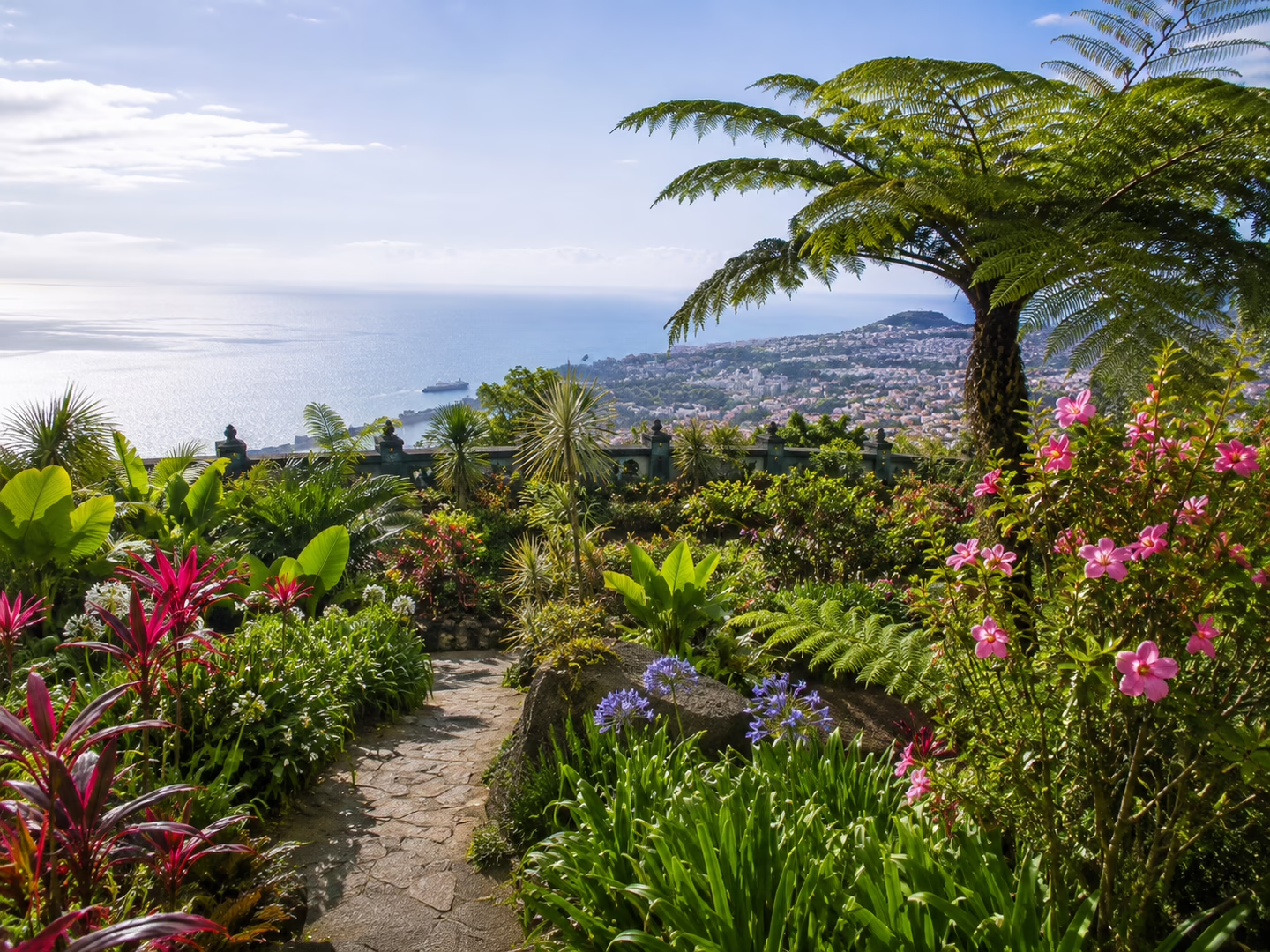
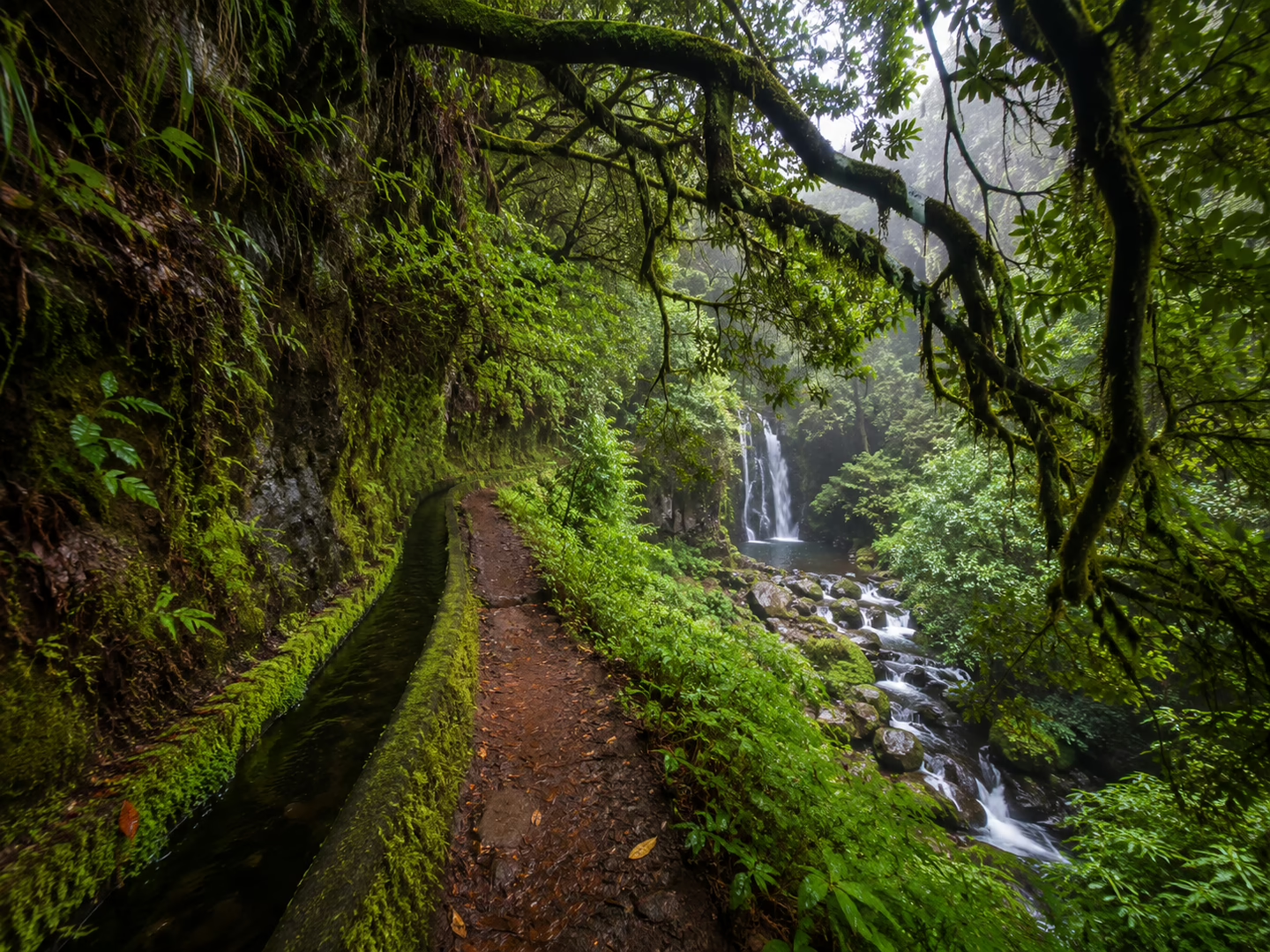
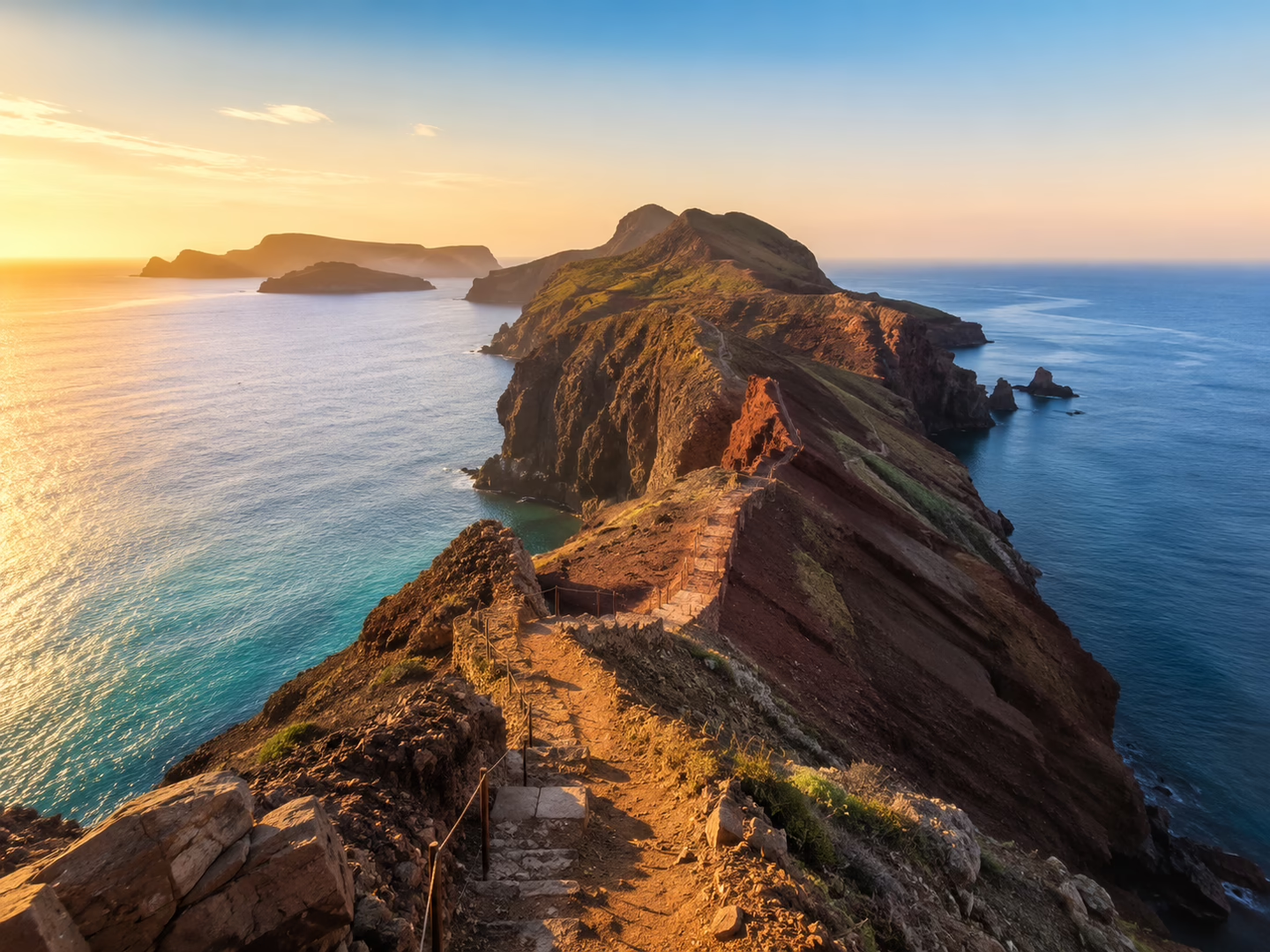
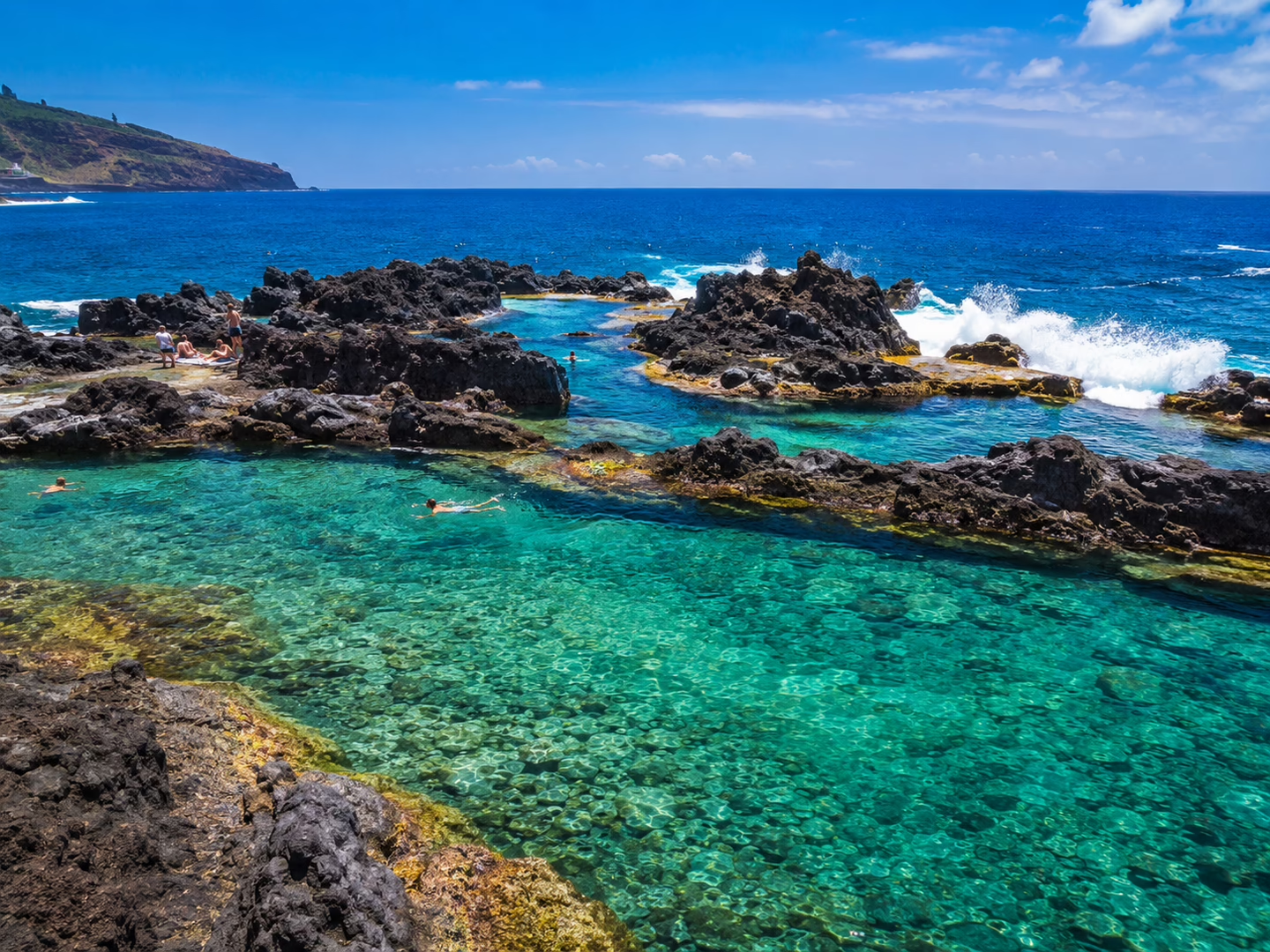
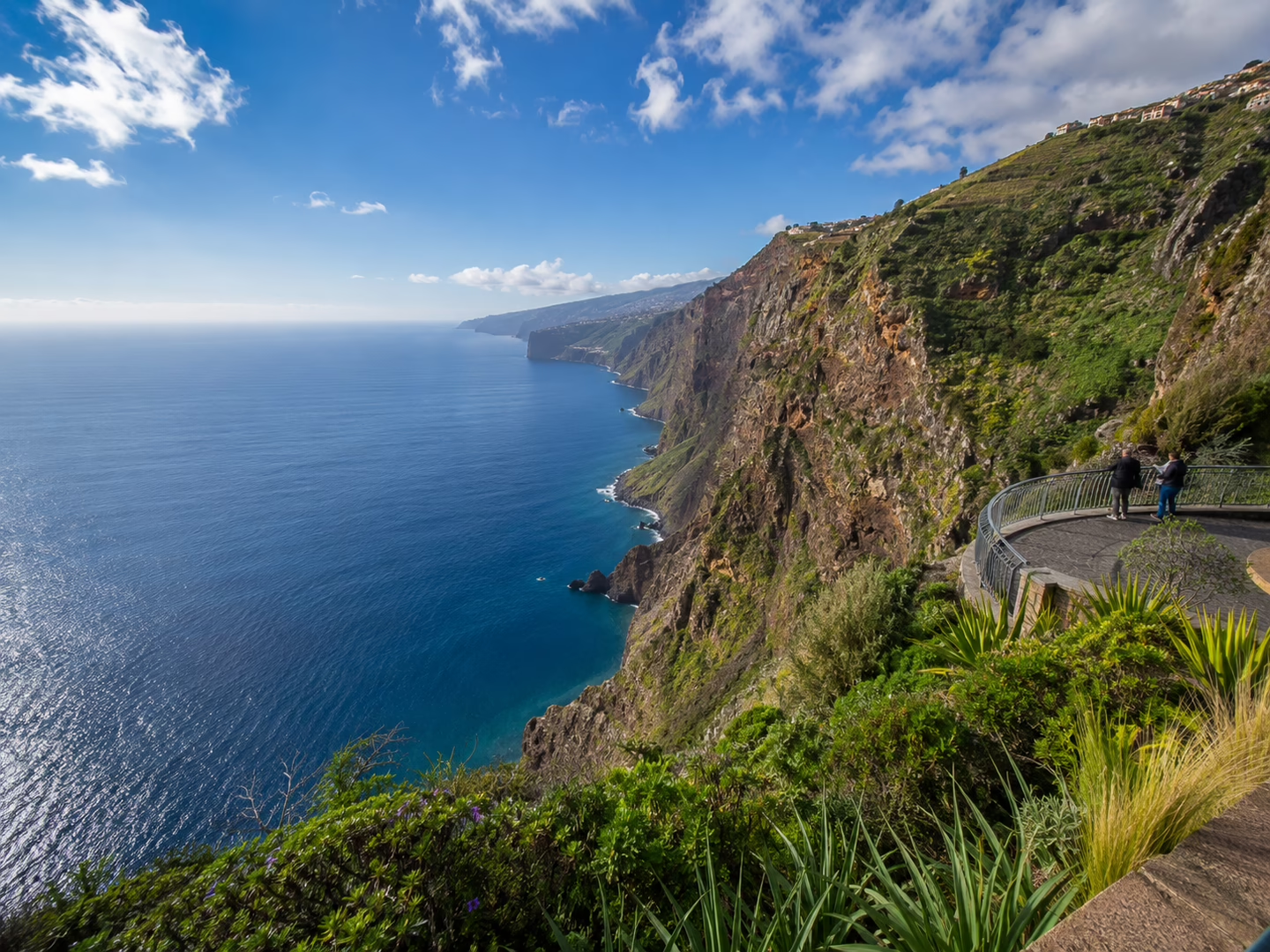
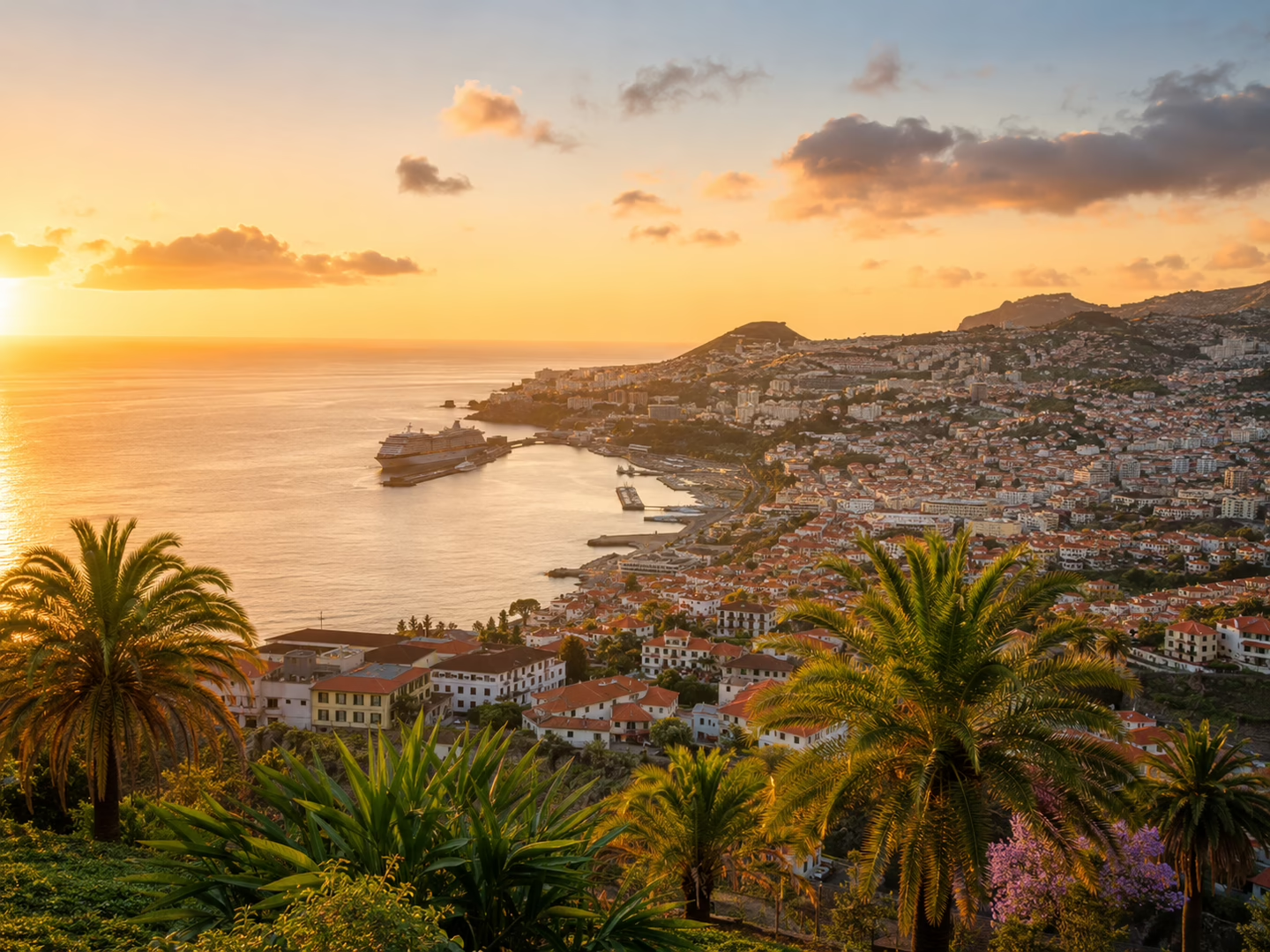
Almost any time works thanks to the mild climate. Spring shines for flowers and hiking, summer for the sea and atmosphere, autumn for calm and the wine harvest, and winter for escaping the cold and the New Year fireworks.
Thousands of travellers already trust us
Sandra Avila
Great treatment, great staff that organizes your trip, excellent!

Ana Medina Marin
Trip to Santorini, Athens and Corfu, very well organized, the hotels very good and with the flights and transfers no problems. Very good experience.

Jesus Prieto
Easy and simple, Great attention! in the best hands
Gisela De La Fuente Rua
The treatment impeccable, I haven't had any problem with anything, not flights, hotels, everything has been incredible. Always worried about whether everything was going well and he adapts to your needs perfectly. Without a doubt on another trip I'll go with him again!!!!

fili manzano
Our trip to Jordan was great. The value for money seemed unbeatable to us. Communication with the agency was smooth at all times and any question was resolved quickly. Thank you very much

ANTONIO GARCIA MORENO
Booking our trip with Travel Care was a real pleasure because of their professionalism, attention, services, friendliness and permanent contact to resolve any question, etcetera. Recommendable 100%. Another thing is the tour operator that operates at the destination. In our case it was Egypt, and the truth is that everything went quite well, but with the odd downside here and there. But in the case at hand, Travel Care, they have been attentive at all times to our needs, responding to and attending to each of our questions at all times. Without a doubt, I would recommend Travel Care if what you're looking for is an organized getaway.
JORGE RODRIGUEZ
Always attentive and available. What you look for in this type of business where trust has to be key. Highly recommendable..

Patxi Hinojosa Luján
The experience with Travel Care has been very positive; the only thing left would be to polish a couple of details on the part of the Tour Operator in question. We were very satisfied with the trip made to Egypt.

Graciela Gutierrez
Everything very well organized!! From the flight, the transfers, the drivers, punctual and good drivers, the boat hotel, wonderful and the food too.. The guide, very good, with a lot of knowledge of the country and very pleasant. The visits, striking, with very complete information. Thanks! Thanks Marc!! Graciela

Celia
Everything has been great! The trip was very well organized and, above all, the guide was a 10.

Brais Blanco
We booked with travel care through Marc, hotel, ski passes, complete ski equipment for the best price in the area in Sort (Port Aine), excellent and personalized service, attentive 24 hours to any possible incident or change. Experience 100% recommended

Ziortza Ricondo
Hi, the trip very good, appropriate value for money, everything very well organized and the destination a wonder and safe. The boat a bit old but very tasty food and good service. In Cairo the hotel also very good but a bit far away, but after so many excursions it's good to rest. The local guide very nice but in a big hurry and a difference in the price of the excursions he offered compared to the group next to us; the guides should agree on the price because it makes you think he was giving himself a tip, but well, it's an unimportant detail, then he got less tip and that's it.

Virginia PEÑALVER
We've just returned from our trip to India, through the golden triangle and everything turned out perfect. Organization and coordination, hotels, restaurants, making the most of the time, free extra activities etc. A 10 to Travelcare! Recommended without a doubt!

Lidia Carrillo hidalgo
Everything great. Very attentive and lots of professionalism. We'll do it again :)

Ecaterina Katya Katie Prodan
Marc assisted me with Miami trip for 7 days. Accommodations in Eden Rock Miami were phenomenal! Marc and his team truly went above and beyond. Customer for life here!! 10 out of 10. Dont hesitate and trust travel Care with your business or leisure travel needs.

Maria ÁLVAREZ
We travelled as a family to London to see the Harry Potter Studio and it was awesome. Marc and Fasial gave constant attention from the moment I saw the offer on Privalia and they convinced me to do it. The best thing is that 6 of us travelled and we slept at Piccadilly Circus in a fantastic hotel. We'll do it again with Privalia and with Travel Care, for sure!!

Juan Jose Monzo Marco
We have taken a wonderful trip to EGYPT, on which we met a wonderful guide named Wael, who showed us everything or almost everything about Egypt, as well as the company for its organisation.

J. Vicenç c
Hi, Marc organised the trip to Rome for me. Good price. He advised me the Trastevere neighbourhood. After the stay; Without a doubt, the best neighbourhood; lively, terrace-hopping, good gastronomy... very pleasant and safe. The Hotel, spacious, zero noise, a 10 for the lunch, super well connected to the centre of Rome Thanks for your advice and guidance.

Thepantershocks 1994
My experience with Travel Care is excellent, especially with Marc. I have travelled to Disney Paris, Marrakech, Fuerteventura and Malta, and the next one I have is for London. They manage to give you the trip you want with everything you want and the treatment is unbeatable. I recommend it 100%. Without a doubt I will keep repeating all my trips with them every year.

Maria Begoña Delgado
From minute zero when I contacted Travel Care to do our trip to Egypt, everything was perfect, they conveyed calm and confidence to me and right until the end, well, everything went fantastic, my experience has been one to repeat and recommend, thanks to Marc for all the help. The reviews you have on the internet are well deserved.

Mari barberà
Wonderful trip to Vietnam and Cambodia, 100% recommendable, with incredible landscapes and monuments and very friendly people. At the agency they were very kind and attentive. Speed to handle any unforeseen event or change before and even during the trip.
ana pcolomina
Our wonderful trip through the Jewels of the Baltic has now ended. I want to thank the whole Travel Care team for such a fantastic trip, it has been very well organised, all the guides have been extraordinary, some even included a visit that wasn't in the programme, like the witches' forest on the Curonian Spit - Nida. The Sigulda Palace and the cave, in Latvia. Also the selection of restaurants and the chosen menu has been fantastic. We will travel with Travel Care again for sure. Many thanks to Marc, in particular for the attention on the first day that gave us confidence, and to Paula Porina for the planning and organisation of the trip 🧡🩷❤️ To Faisal too because he helped us with the online check-in on the way back. Regards!!

Maria de la O Moreno Balboa
I have just returned from a trip managed by Travel Care. The organization of the trip was excellent and everything was easy and helpful. We will trust them again for our next holidays.

Javi Giráldez
Very well organized. Any incident during the trip they solved in a few minutes. We traveled to Egypt and the agency worked excellently.

vane ubom
A great experience, our trip to Egypt, with Travel Care Barcelona... Great organization and personalized attention, they resolve any question you may have before and during the trip. A total success on an organized trip, no surprises and completely safe. Very kind and 10/10 attention 👏... We will do more trips

mar garcia
Impressive !!! We booked a trip to Egypt via vente privee with them. Customer service at the purchase of the service is a 10 . The guides at the destination and the agency incredible, they looked after our safety and comfort the whole trip . I can only thank them for the good service offered. To the guide Mohamed who is an extraordinary person and passionate about what he does and to the two guides from the agency Sama travel who made us feel safe and pampered the whole trip . We will do it again

Eduard Ortuño Garrote
We took the Disney pack and it was perfect. Good price and very well managed by Jaume, very good attention and quick to answer questions.

Juan Carlos González
A wonderful trip with excellent guides, hotels, transport, meals and organization a TEN. Thanks for these 10 Perfect days.

carmen
Our trip to Japan has been perfect. All the services: transfers, excursions, flights have worked wonderfully. It turned out to be a comfortable trip with no incidents. The hotels have been very good. We didn't need assistance because everything was very clear and any question prior to the trip resolved quickly.

José Luis Valiente
Congratulations to Marc, the truth is that traveling with TRAVEL CARE is always a success, very well advised, we'll keep trusting you!

Marian Gonzalez
I've traveled with many agencies,but travel care beat them all….everything to the millimeter,clear and concrete explanations,all the pickups super punctual,continuous communication.In our case a trip to Thailand with loads of excursions,flights and pickups and everything PERFECT!!!!A thousand thanks!!!!!
Sandra Gutierrez
We traveled to Egypt in November 2025, we took a promotion through a website unrelated to travelcare and, upon seeing that the hotel they assigned us was very far from the center, we requested a category change; the first time they told me it wasn't possible and a week later they themselves wrote to me again saying they had another operator, a bit more expensive but with more excursions and the hotel central in Cairo. At the airport GALAXIA picked us up, couldn't be better, while there were huge queues of monturista (thank goodness I didn't book with them); the person in charge from our company received us in a minibus and kept telling us things until we reached the cruise. The guide on the trip wasn't spectacular but the cruise NILE PARADISE and the RAMSES HILTON, the hotel in Cairo, no complaints and within what we expected! (You have to be realistic and know that you're going to EGYPT not to a 5-star in Dubai🤣) We would definitely do it again, above all grateful that it came from them to write to us about the change and make things easier for us since we were about to cancel when we just received the possibility. Thanks to the Galaxia team! Thanks Travelcare, an incredible trip!
Aitor Monteagud Peinado
Everything was perfect. We'll do it again!!!

maria pbl
As always, a pleasure to book with them, incredible hotels at unbeatable prices. I definitely recommend it.

mitchell james
Been booking flights with Marc for about 3 years now. He has always looked after me with swift replies when I’m on the go, and the fact that you can pay with crypto makes me keep booking flights. Make sure you go through him, always available via telegram and is a friendly guy Off to the pyramids of Giza I go…

S C
We had a magnificent experience on our trip to Egypt in December 2025. We want to highlight the great help both from the Travel Care team during the booking, and from the tour operator Galaxia, for all the organization at the destination. Quite a discovery!! We'll book with you again next time!!

Anna López Fernández
We went on a trip to Marrakech with various excursions. A mix between free time and organized activities that we loved a lot. Marc put the trip together, with transfers, accommodations and activities. Everything went great and, during the stay, he made sure everything turned out as we expected. A luxury to travel like this! Thanks!

Vanessa Rodríguez Ponsy
Wonderful team! Everything easy and fast

Ana Toran Torrescasana
We took a trip to Egypt with our grandchildren in October 2025, booked with the Travel Care agency. Communication and information before the trip was smooth and effective. The departure formalities were simple thanks to the help of their agents. Apart from a problem with the visa that delayed us two hours on arrival (not attributable to the agency, but to the incompetence of the Egyptian officials), the support of the local agents (SAMA TRAVEL) was also very good. Our motor vessel, Málaga, was not the most modern or the most luxurious, but it was clean, spacious, and the food was tasty, plentiful and varied, with many options for coeliacs or vegetarians. The staff a 10: charming, professional and with very personal and close treatment. The Cairo hotel, Tulip, is modern and spacious but it is isolated and far from everything. This was a problem since the food and room service were very poor and slow, and there were no other options without grabbing a taxi. The advantage is that it is near the airport if your flight leaves early. A special mention for our guide, WAEL, alias "GUAY". Thanks to his early starts we managed to arrive first at all the visits, which let us enjoy the best Egyptian sunrises accompanied by his excellent and well-documented explanations, avoiding the hours of maximum tourist crowds. He is a renowned Egyptologist who speaks perfect Spanish and knew how to convey his enthusiasm for his culture and his country. An excellent travel companion, always cheerful and cultured, he knew how to create an excellent atmosphere in the group, which became the FAMILIA GUAY. In the end we were all friends (without invading everyone else's privacy). Thanks to WAEL and to the professionalism and kindness of the ship's staff, and to the support of the agencies, we will remember this trip through Egypt not only as a cultural experience but also as an excellent personal memory.
Conchi Conde
A lovely trip. Travel Care's handling has been very good. The assistance on-site at all times has been phenomenal. Egypt is a beautiful place to discover and explore.

Maica Nolla
Travelling with Travel Care is synonymous with peace of mind. At all times you feel accompanied and cared for, and that gives great security. You know that everything will go well and that the experience will be excellent. The trip to Marrakech was varied, of great quality and absolutely unforgettable. Simply fabulous!

Marc Mora Requena
Third year with them and delighted! They found us a hotel and car at a very good price in Ibiza and no problem at all. 100% professional and recommended!

Francisco Javier Mauricio Vivancos
Very good service, friendly, kind and very good prices to be able to travel and low prices to rent cars too, apart from hotels, flights and boats.

Patricia Jimenez
We've just got back from a fantastic trip along the West Coast of the USA organised by Travel Care and I have nothing but good words: flexibility in the itinerary and hotels adapted to our needs, competitive prices, 24 h assistance on-site... Thanks Faisal for everything!!!! We'll see each other again on another trip, for sure!

Sergio Jiménez Marina
We have travelled with them to Chicago, Orlando and Miami. We couldn't be happier. In daily contact in case there were problems, really, we've already talked about next summer. A great agency with real people behind it. Thanks Faizal!

Miota85
A pretty decent agency. Very good customer service in the face of the problems that arose during the trip and beforehand. Thank you.

Oriol Sarroca
Highly recommended. After looking at several agencies to organize our honeymoon we chose Travel Care for the service and the best value for money that we found. They adapted completely to our idea, making an idyllic trip through Japan and Bali come true. We started with the biggest cities like Tokyo, Kyoto, Hiroshima, Osaka down to little villages in the mountains where we could enjoy the experience of Ryokans with Onsens. Finishing off the whole trip with 5 days in Bali, relaxed at a villa by the sea. We can say that we have found our trusted agency. Thank you Faisal!

Jose Ruiz
I have just returned from a trip to India with my partner (Golden Triangle and Benares). It has been an incredible experience. Thanks to the Travel Care team because everything went wonderfully well. Both they and the local agency were attentive at all times, they solve any doubt or problem that may arise quickly and efficiently. Once at the destination, everything went smoothly and without any inconvenience, and the services, assistance, guides, driver, visits, restaurants, hotels and so on were really up to the mark, exceeding our expectations. The trip itself, a spectacle and an experience recommended to everyone, is something unique and indescribable. Thanks again, don't hesitate to hire the services of this agency. We are looking forward to traveling with them again as soon as possible ❤️